
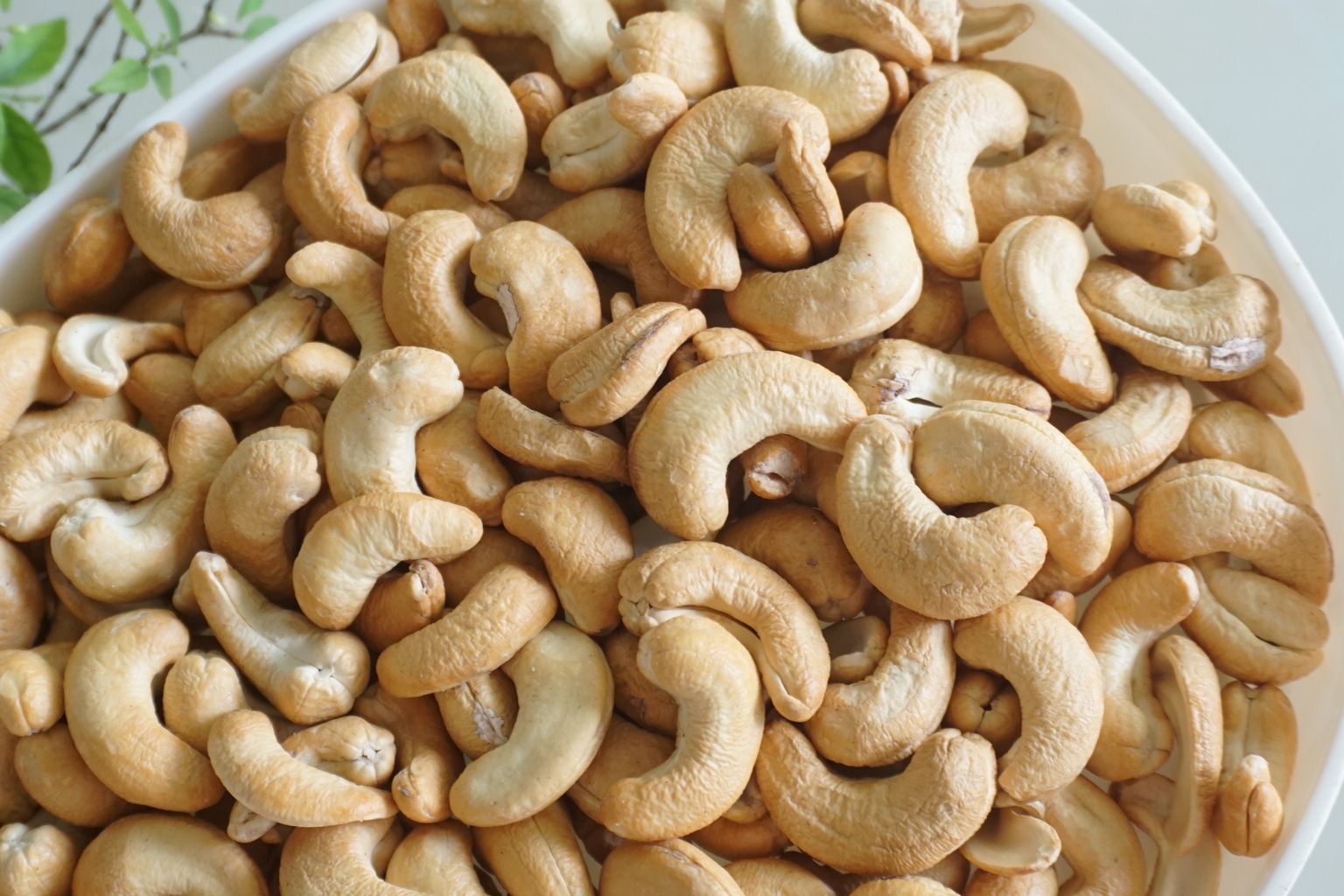
For commercial kitchens, the sample also needs to work in your recipe. A sweet shop can compare how kaju katli cuts after cooling. A bakery can compare the cashew pieces after baking. Good appearance alone cannot confirm food safety or cooking results.
Decide what your order must include
List the grade, pack weight and maximum broken pieces before requesting prices. Ask for numbers when a supplier describes cashews as premium quality. Put the requirements in writing before paying for the order.
Cashew type and use: Choose whole cashews, splits or pieces for your product. A sweet shop may grind pieces and use whole cashews for decoration.
Grade and limits: Include the grade, count range and grading standard. Specify acceptable colour and separate limits for moisture and broken pieces. Name any other permitted faults and their limits.
Packs and quantity: Confirm the pack type, weight inside each pack and total quantity. Compare quotations for the same grade, quantity and packing requirements.
Checks and complaints: Confirm the required reports and who will check deliveries. Agree the complaint deadline and possible remedies for failed checks. Include who pays return freight when a confirmed problem requires a return.
Verify the supplier licence or registration through FoSCoS. Match the business name and address with the seller details.
Request a sample from the batch you will receive
Ask the supplier to identify the batch used for your sample. A batch number identifies a particular group of goods. If the delivery will come from another batch, request another sample.
Get a written sampling plan before anyone opens the packs. It should identify the batch and answer four questions:
- How many packs will supply material for the sample?
- How will those packs and collection points be chosen?
- How much material does each planned test require?
- Who will collect, label and seal the samples?
Use the complete sampling procedure required under your purchase specification. For example, the AFI procedure includes selection across packs and collection points. A handful from one open bag cannot establish the condition of an entire delivery.
Label the samples with the batch, pack numbers and collection date. Separate the material needed for testing, cooking and later comparison. Seal the comparison sample and follow the stated storage instructions.
13 cashew quality checks for wholesale buyers
Begin with unopened packs, batch details and dates. Then examine the cashews and complete the measurements your order requires. Use samples in food only after completing the required safety checks.
1. Check pack seals before opening the delivery
Look for split seals, holes and wet outer cartons. Examine the inner pack even when the carton looks sound. Photograph damage and the batch number before opening an affected pack.
The Global Cashew Council describes sealed bulk packing that protects cashews. Compare pouch tightness with the packing method the supplier used.
- Vacuum packs: Flag a pouch that looks looser than the approved sample.
- Gas-filled packs: Confirm the expected pouch shape with the supplier.
- Damaged packs: Separate them and request written replacement or return instructions.
Some packing methods combine vacuum and protective gas. Loose packaging alone cannot establish moisture content or remaining storage life.
2. Match batch numbers with the sample and report
Compare batch numbers on the packs, sample label and test report. Ask the supplier to account for different codes in writing. Confirm which goods the report covers before accepting it.
Check the product and quantity against the invoice. List the quantity received under each batch number. One invoice may cover 2 batches with separate test reports. Match each batch with its own sample and supporting documents.
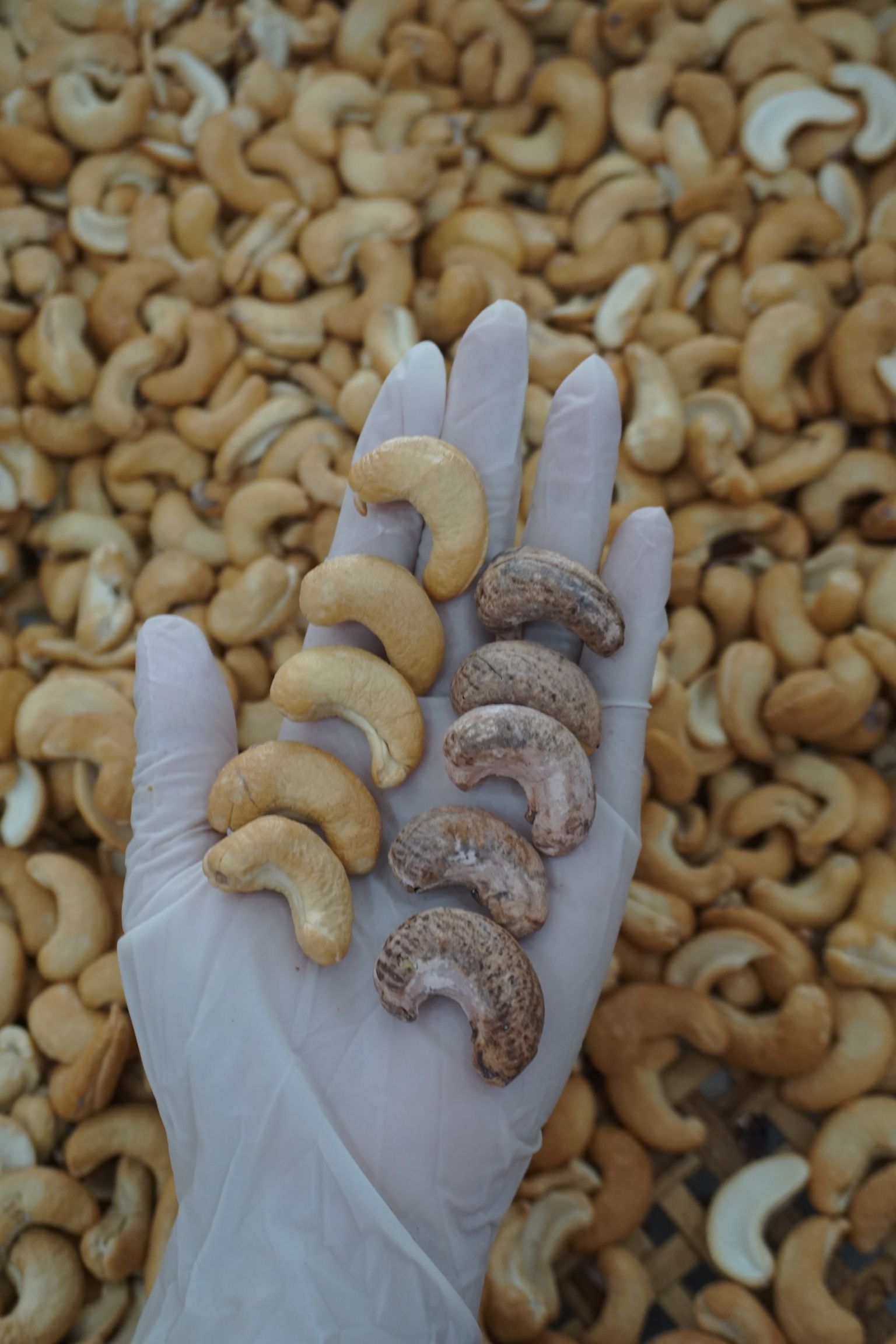
3. Compare size, colour and surface marks
Spread the sample on a tray to examine individual cashews. Compare samples from separate packs under the same lighting. Look for differences in size, colour and surface marks.
Colour alone cannot establish age. AFI First Quality Fancy permits light-yellow shades within its colour description. Judge colour against the grade named in your order.
Separate scratched cashews from those with dark spots. The Indian trade chart permits some scraping when the original cashew shape remains intact. Photograph the full tray and take close-ups of disputed marks. Send those photos when asking the supplier about grade differences.
BEFORE YOU BUY
Turn the sample. Compare both surfaces.
- Look
- Size · colour
- Turn
- Both surfaces
- Record
- Photo · batch
Compare with the grade named in your order.
4. Read the moisture result for the batch
Ask for the moisture result for the batch you will receive. A snap sound or soft texture cannot measure moisture percentage. Compare the reported number with the named standard and your order.
| Source | Stated moisture limit | Scope |
|---|---|---|
| FSSAI cashew standard | Maximum 5% | Indian product standard |
| AFI specification | 3–5%, using its stated test method | US trade specification |
A 5.4% result exceeds the stated FSSAI maximum. Set the batch aside and ask the supplier to address the failed result.
A 4.8% result falls below the 5% maximum. However, it exceeds a stricter 4% limit written into an order. Compare results using the test method required under that specification.
5. Set aside unusual smells and surface powder
Set aside packs with musty, sour or stale-oil smells. Avoid tasting suspect samples or adding them to food. Cashew oil can spoil, creating an unpleasant smell or taste. The FSSAI standard excludes rancid cashews and those with unusual smells.
Rubbing cashews between your fingers cannot identify starch or bleach. Ask the supplier about surface powder and any coatings used. Leave affected packs unused while you confirm the material is safe.
Photograph the powder before handling the cashews further. Include the pack number and seal a sample for further testing. Describe the visible material without assigning an unproven chemical cause.
6. Look for insects, mould and shell pieces
Examine both the cashews and the material inside their packaging. Split sample cashews to look at their inner surfaces. Use the number specified in your sampling plan.
- On the tray: Look for insects, webbing, holes and shell pieces.
- Inside cashews: Split the selected test sample and examine the inner surfaces.
- Inside packs: Check seams, corners and loose material left after emptying.
Powder or crumbs alone cannot identify the cause of a problem. Photograph unusual material and set the affected packs aside. Removing visible insects or debris cannot establish that the remaining cashews are safe.
7. Count whole cashews to check the size grade
The Indian trade chart specifies 300–320 whole cashews per 454 g for W320. Use a weighed sample of whole cashews for the count. Broken pieces belong in the separate breakage check below.
- Place the empty container on the scale and zero it.
- Weigh 454 g of whole cashews, leaving broken pieces out.
- Count the cashews and note the result beside the sample label.
- Check the scale and repeat any result outside the stated range.
For example, 340 whole cashews in 454 g exceeds the W320 range. More whole cashews within the same weight indicates a smaller average size. Send the supplier the count, sample weight and batch number.
A count within the range meets that requirement for the sample. Use the agreed sampling procedure for a decision about the full delivery.
8. Look for brown skin left on the cashews
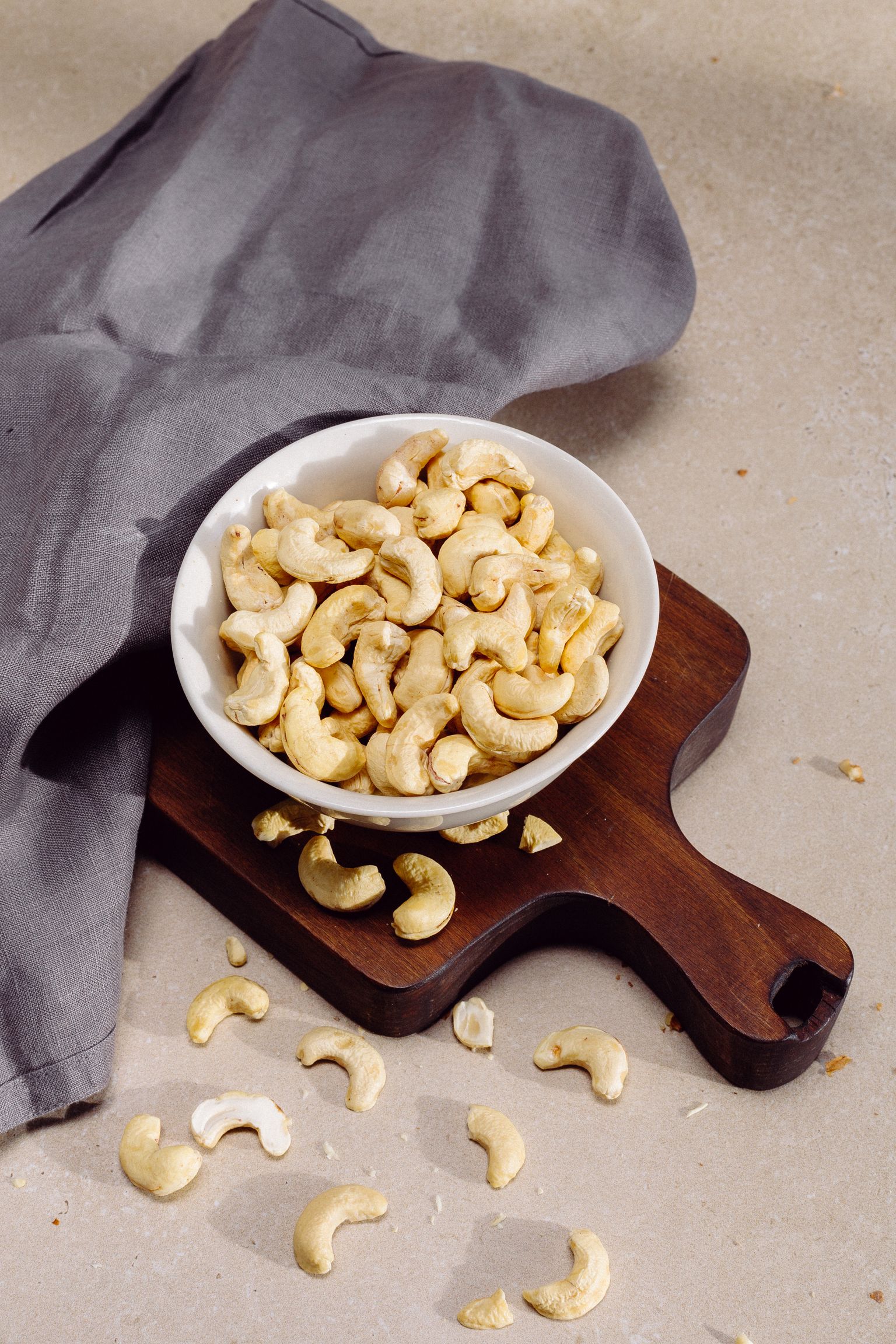
Look along the curved edge and folds for attached brown skin. Turn the cashews over to examine both surfaces. Photograph affected pieces beside the sample label for comparison.
The Indian trade chart specifies white whole cashews without attached brown skin. Flag visible skin when your order uses that requirement. Avoid calculating a skin percentage from scraped-off flakes without a defined test method.
9. Measure broken pieces in a whole-cashew order
Weigh the broken pieces and compare their percentage with your order. The Indian trade chart specifies a 5% maximum for white wholes. AFI permits 10% under its whole-cashew trade specification. Put the chosen standard and any stricter limit on the order.
Check how that standard treats small chips before sorting. Under AFI, a whole cashew retains its shape with at most one-eighth missing. A small chip can therefore remain within the whole category under that rule.
Broken pieces (%) = weight of broken pieces ÷ total sample weight × 100
Suppose a 1,000 g sample contains 60 g of broken pieces. The calculation is 60 ÷ 1,000 × 100, or 6%. A 5% limit permits 50 g in that sample. That is 10 g above the permitted amount.
Use the original sample weight, including the pieces, in the calculation. Dividing against a smaller weight would inflate the percentage.
BEFORE YOU BUY
Broken pieces: measure by weight.
- Total sample
- 1,000 g
- Broken pieces
- 60 g
- Breakage
- 6%
60 ÷ 1,000 × 100 = 6%
10. Weigh the cashews without their packaging
Compare the cashew weight with the quantity stated on the pack. A filled-pack weight includes the cashews and their packaging. Weigh the actual empty packaging used for the calculation.
Cashew weight = filled-pack weight − empty-pack weight
Suppose a filled pack weighs 10.40 kg and its packaging weighs 0.50 kg. The cashews weigh 9.90 kg, leaving a 100 g shortage against 10 kg. Check the scale, then weigh more packs individually.
Send the supplier each measured pack weight and the total shortage found. Avoid applying one short-pack result to every unopened pack.
11. Order an amount you can use before expiry
Read the expiry date on the pack or supplied documents. Compare it with the date you expect to finish the order. Ask about any shorter storage period after opening.
Suppose your kitchen uses 5 kg weekly and orders 30 kg. You would need 6 weeks to use the order. If expiry is 4 weeks away, order less or request later-dated goods. Splitting deliveries helps only when the later packs have adequate remaining life.
Follow the product instructions for storage temperature and opened packs. Protect cashews from pests and strong smells, following cashew storage recommendations. Write the opening date beside the batch number on each pack.
12. Read the test values and report dates
A certificate of analysis, or COA, lists test results for a sample. Look for measured values beside any general pass statement. Compare the completed tests with those required for your order.
- Product: Cashew type and identification of the tested sample.
- Collection: Who collected it, how and on which date.
- Results: Test dates, methods, values and measurement units.
- Limits: The standard and permitted limit beside each result.
Check the NABL accreditation details for the testing facility. Match the tests, methods and address with those on your report. Confirm that accreditation was valid on the test date.
A moisture result covers moisture alone, even when it passes. Request any missing test results before accepting the batch.
13. Make the product you plan to sell
Use samples that have passed the required food safety checks. Compare the new cashews with a batch that worked in your recipe. Use the same equipment, amounts and processing time for both batches.
For kaju katli, use equal amounts of cashews, sugar and other ingredients. Allow both batches the same cooling time before comparing them. Compare colour and firmness, then look for cracks, crumbs and sticking during cutting.
For gravy or sauce, use equal amounts of cashews and liquid. Compare smoothness and thickness before changing the recipe.
For biscuits, compare the appearance of cashew pieces after baking. Use the same baking time and temperature for both batches. For roasted cashews, compare how evenly the nuts brown.
Grinding can produce cashew paste, which is useful for cashew butter. Oil release alone cannot prove old cashews or incorrect drying. Judge the result against the product you intend to make.
Follow the minimum batch size specified for your machine. Weigh the usable finished product from each batch. Changing the recipe makes it harder to compare the two samples.
Compare the cost of the cashews your product can use
Separate whole cashews, usable pieces and material you must reject. In the earlier 1,000 g example, 60 g consisted of broken pieces. Assuming no other faults or losses, the sample contains:
- 940 g of whole cashews for a product requiring whole nuts.
- 60 g of usable pieces for another suitable product.
- 0 g rejected under the assumptions in the example.
Suppose the purchase price is ₹800 for 1 kg. Calculate ₹800 ÷ 0.94 kg to reach ₹851.06 per kg of whole cashews. The calculation assigns zero value to the broken pieces. It also excludes sorting, cooking and other processing costs.
Now suppose your business can recover ₹30 from those usable pieces. Subtract ₹30 from ₹800, leaving ₹770 allocated to the whole cashews. Divide ₹770 across 0.94 kg to reach ₹819.15 per kg.
Use a value your business can actually recover from the pieces. Counting the same value twice would understate the cost of whole cashews. Compare supplier prices using the same method and cost assumptions.
BEFORE YOU BUY
Look beyond the quoted kilo price.
- Whole cashews
- 940 g
- With no value for pieces
- ₹851.06 / kg
- After recovering ₹30 for pieces
- ₹819.15 / kg
₹800 ÷ 0.94 kg · ₹770 ÷ 0.94 kg
Accept the delivery, set it aside or return it
Check the delivery even when the earlier sample passed. Decide which batches your team can use or sell. Send the decision to the receiving, purchasing and kitchen teams.
Accept goods that meet your requirements. Confirm the grade, required safety checks and any agreed cooking results. Mark the accepted batch numbers before releasing goods for use.
Set aside packs with unresolved problems. Separate damaged packs and batches with missing reports or disputed results. Leave them unused while obtaining answers or further testing.
Reject a confirmed food safety failure. Send the reason in writing and confirm return or disposal instructions. For size or breakage differences, follow the remedy specified in your order.
Send dated photos, measured results and affected batch numbers together. Report problems within the complaint period agreed with the supplier.
Request a Cashew Wholesale Quote from NutDana
Send NutDana your preferred grade, quantity and delivery PIN code. Mention how your business will use the cashews. Ask for pricing, packing details and sample terms before ordering.