
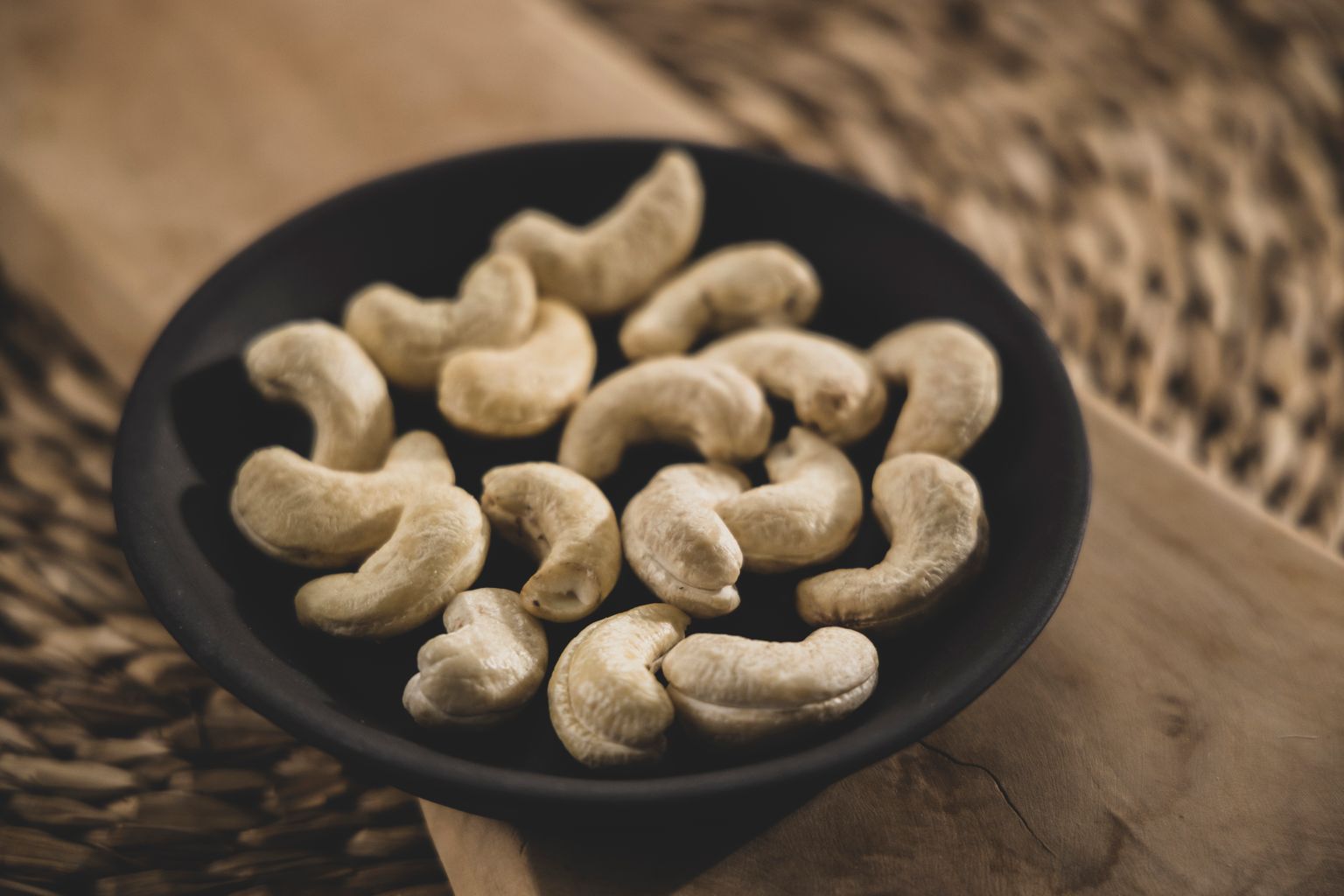
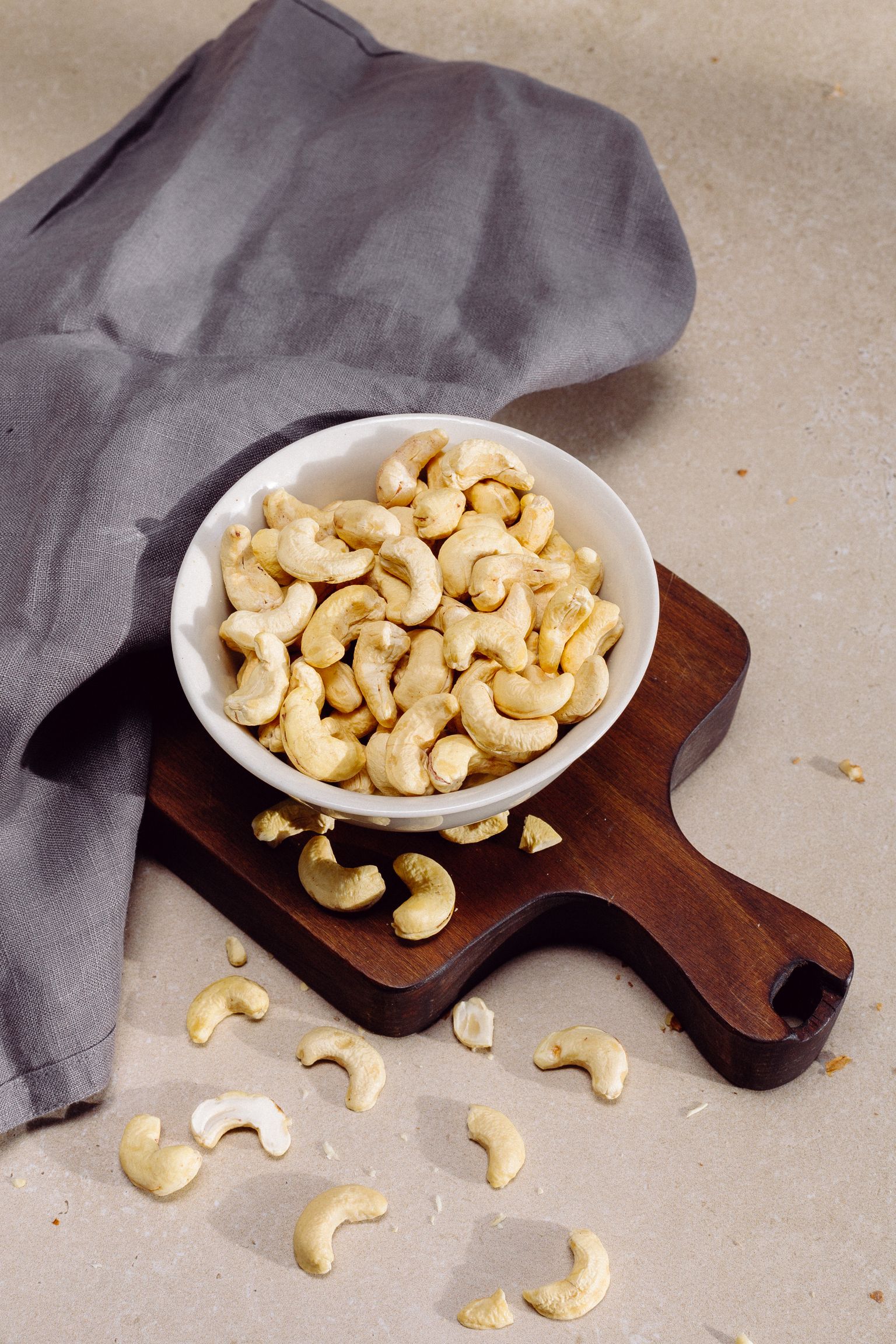
Cashews, or kaju, are a familiar dry fruit for snacks and cooking. When buying them, you may wonder how many pieces the packet contains. How many cashew pieces will you get in 1 kg? Grade codes help you compare sizes before choosing your cashews.
What Is Cashew Grading?
Cashew grading groups cashews according to size, colour, form and condition. W identifies white whole cashews, while the number indicates their size. Whole-cashew size grades use piece counts within 1 pound, approximately 454 g. For example, W320 represents approximately 300–320 whole cashews in each pound.
Lower grade numbers indicate larger cashews and fewer pieces per kilogram. The size number alone cannot establish freshness, taste or overall quality.
Cashew Count per Kg for Each Grade
W320 cashews contain about 660–706 whole pieces per kilogram. W240 cashews contain roughly 485–530 pieces in the same weight. A lower grade number indicates larger kaju and fewer pieces.
| Cashew grade | Approximate whole pieces in 1 kg |
|---|---|
| W180 | 375–395 |
| W210 | 440–465 |
| W240 | 485–530 |
| W280 | 575–620 |
| W320 | 660–706 |
| W400 | 770–880 |
| W450 | 880–990 |
| W500 | 990–1,100 |
Suppliers can follow different count ranges for the same grade. Ask for the count range when ordering a particular size.
W grades refer to white whole cashews of different sizes. W320 refers to 300–320 whole cashews per pound, approximately 454 g. Size grades alone cannot establish freshness or flavour.
CASHEWS, COUNTED
Same weight. Different counts.
- W180
- 375–395
- W240
- 485–530
- W320
- 660–706
pieces / kg
Cashew Counts in Smaller Packets
A 100 g portion of W320 cashews contains roughly 66–71 whole pieces. A 500 g packet contains approximately 330–353 pieces of the same grade.
| Packet weight | W180 pieces | W240 pieces | W320 pieces |
|---|---|---|---|
| 100 g | 38–40 | 49–53 | 66–71 |
| 200 g | 75–79 | 97–106 | 132–141 |
| 250 g | 94–99 | 121–133 | 165–177 |
| 500 g | 188–198 | 243–265 | 330–353 |
For example, 200 g of W320 contains around 132–141 whole cashews.
Counting Cashews Without a Grade Label
Count the whole cashews in 100 g to estimate your packet total. You need a kitchen scale, a bowl and a clean tray.
- Gently mix the packet contents before taking your sample.
- Place the empty bowl on your scale and press zero.
- Add 100 g of cashews, including any broken pieces.
- Spread the sample across your tray, counting wholes and fragments separately.
Suppose your 100 g sample contains 68 whole cashews. Multiply 68 × 10 for approximately 680 whole cashews per kilogram. A 500 g packet would contain roughly 340 whole cashews. Broken pieces add weight to the sample; count only whole cashews.
For other weights, multiply sample count × packet grams ÷ sample grams. A 50 g sample containing 34 wholes suggests 680 per kilogram.
With enough cashews available, count three separate 100 g samples. Counts of 66, 68 and 70 average 68 per sample. A home count cannot confirm every detail of the packet grade.
CASHEWS, COUNTED
Count a sample. Estimate the packet.
- 100 g sample
- 68
- Multiply by
- × 10
- Estimate for 1 kg
- ≈ 680
whole pieces
Cashew Weight in Grams and Counts in Small Portions
A whole W320 cashew weighs about 1.4–1.5 g on average. 10 W320 cashews weigh around 14–15 g; 20 weigh roughly 28–30 g. Larger W180 cashews weigh about 2.5–2.7 g each on average.
For a 20 g portion of W320, count approximately 13–14 whole cashews. A 30 g portion contains around 20–21 whole pieces of the same grade. Weigh your portion whenever a recipe requires a specific number of grams.
Buying Enough Cashews for Sweets and Garnishes
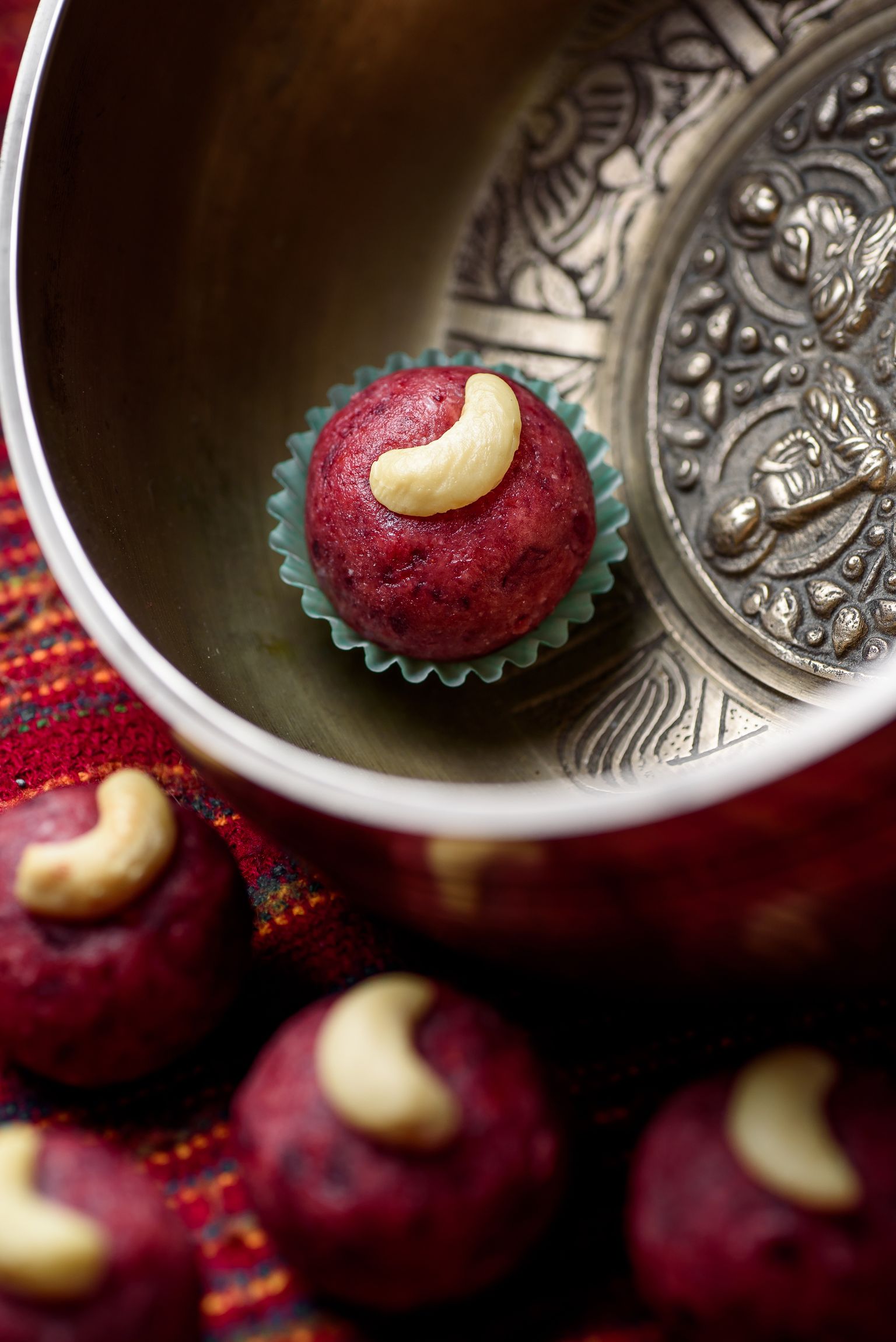
For 120 sweets with 1 whole cashew each, you need 120 usable pieces. The weight to buy depends on the size and number of suitable cashews.
Imagine your 100 g sample contains 68 usable whole cashews. Calculate 120 × 100 ÷ 68, allowing approximately 177 g. A 200 g purchase could contain about 136 usable whole cashews.
A sample cannot promise an exact count across the entire packet. For an exact requirement, count every suitable piece before cooking.
For 30 sweets needing two cashew halves each, count 60 halves. Thirty whole cashews can supply 60 halves before any breakage. Choose matching halves when appearance counts; irregular fragments differ in shape.
CASHEWS, COUNTED
One sweet. One whole cashew.
- Sweets
- 120
- Pieces / 100 g sample
- 68
- Weight needed
- ≈ 177 g
120 × 100 ÷ 68
Counting Whole, Broken and Coated Cashews
Broken cashews have no fixed piece count per kilogram. Small fragments produce a higher count than larger pieces at the same weight.
Broken cashews: Follow the ingredient weight when a recipe specifies grams. If your kaju katli recipe needs 250 g, weigh that amount. A 500 g packet supplies two batches at that ingredient weight. Match the recipe requirement for plain cashews and its preparation stage. Weigh before soaking when the recipe specifies a dry ingredient weight.
Roasted or coated cashews: Weigh and count a sample from the packet. Coatings add to the packet weight alongside the cashews. Different coatings can produce different counts within the same weight.
Checking Packet Weight When the Piece Count Looks Low
A low cashew count cannot tell you a packet weighs less. Weigh the full contents to compare them with the printed net weight.
Place an empty bowl on your scale and press zero. Pour in all the contents, excluding the packet itself. Compare the displayed weight with the printed net weight. If concerned, share the weight reading and packet label with the seller.